Showing posts with label Hybrid. Show all posts

2011 Calypso sports car concept is Inspired by a shark

2011 Calypso sports car 1
Calypso is a concept sports car with aggressive and strong but yet simple design line inspired by the sharks. The cutting edge simple design of this single-seater sports car has made it unusual from others. But the key amazing feature of this car is the pulled out rear-view mirrors from the cars hood which will not only improve aerodynamics but the visual elegance of this car will also achieve a new level. This extraordinary rear-view mirror also includes left and right indicator light that allows easier and better sight for the other drivers. Altogether, the combination of stylish white body with black tinted glass, this car will be appreciated by any sports lovers.

2011 Calypso sports car 2
2011 Calypso sports car 3

2011 Honda RA-X Two Seater Concept Sports Car

2011 Honda RA X Concept Sports Car 1Honda RA-X is the latest concept sportscar inspired by the beginning of motorsport competition during the 60s and hence was named as RA similar with the first F1 cars in distinctive white and yellow colors. This two-seater concept car comprises MR engine and back transmission with a capacity of over 350 hp, while the position of the exhaust pipes positively reminds the RA300 F1. The design features innovative smooth crossing lines in the surface that forms a theoretical X. The car’s engine can be seen through a glass and predominates at the back side of the engine vent with optical technology-led groups forming a triangular shape. The inlets are merged with optical groups on the front and the dimensions of the car are: length 4050 x height 1163 x 1940 Wide.
2011 Honda RA X Concept Sports Car 2
2011 Honda RA X Concept Sports Car 4
2011 Honda RA X Concept Sports Car 5
2011 Honda RA X Concept Sports Car 6
2011 Honda RA X Concept Sports Car 7

2012 Infiniti M35h Hybrid Pics

With the M35h, Infiniti duplicated Lexus' brainstorm of planning a hybrid framework for representation as opposed to hard and fast fuel economy. Thusly, the hybrid utilizes Infiniti's 3. 5 liter V 6 coupled to an electric engine to generate a joined together 360 horsepower. For what Infiniti calls a hybrid appearance sedan, fuel economy isn't horrible either at a gauged 25/30/27 mpg (city/hwy/combined).

The hybrid framework utilizes a lone, 50 kW (67 horsepower) electric engine powered by a lithium ion electric storage device to convey motive capacity straightforwardly to the seven speed programmed transmission.


2012 Infiniti M35h Hybrid


2012 Infiniti M35h Hybrid
As a result of the engine's in a split second unoccupied 199 pound feet of torque, it can be clutched in without kicking the motor on to propel the M35h for up to 1. 2 miles at speeds up to 62 mph. Doubtlessly the engine can do something greater than propel the auto also, becoming a generator when decelerating to charge the electric cell.
2012 Infiniti M35h Hybrid

2012 Infiniti M35h Hybrid

2012 Infiniti M35h Hybrid

2012 Infiniti M35h Hybrid


2012 Infiniti M35h Hybrid

2012 Infiniti M35h Hybrid

2012 Infiniti M35h Hybrid

2012 Infiniti M35h Hybrid

2012 Infiniti M35h Hybrid

2012 Infiniti M35h Hybrid

2012 Infiniti M35h Hybrid


2011 Kia Optima Hybrid info

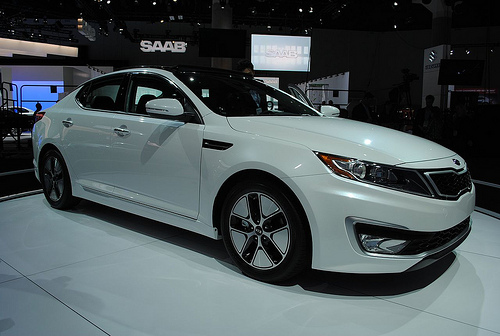
The Optima hybrid lands in showrooms in right on time 2011, with a cost looked for to be roughly $26,000 significance the Optima hybrid might go in as the most reduced estimated mid size gas electric sedan on the financial sector (the restrained openness Nissan Altima hybrid begins at $27,530, while the Ford Fusion hybrid costs $28,990). That situations the hybrid close the top of the Optima's go, with costs for the routinely powered poses stretching from $19,690 to $26,690.


2011 Kia Optima Hybrid

2011 Kia Optima Hybrid

2011 Kia Optima Hybrid

Kia and Hyundai can offer their hybrid poses at such easy costs, to a limited extent, on the grounds that their full parallel hybrid framework utilizes a modular go at, piggybacking the hybrid hardware onto existing motors and powertrains in this case, a 2. 4 liter four barrel motor, modified with Atkinson cycle operation for preferable effectiveness, and an off the ledge six speed mechanical. Consolidated output from the gas electric framework is 206 hp and 195 lb ft of torque.

2011 Kia Optima Hybrid

2011 Kia Optima Hybrid

2011 Kia Optima Hybrid

2011 Kia Optima Hybrid

2011 Kia Optima Hybrid

2011 Kia Optima Hybrid

2011 Kia Optima Hybrid

2011 Kia Optima Hybrid

2011 Kia Optima Hybrid

2011 Kia Optima Hybrid

2011 Kia Optima Hybrid

2011 Kia Optima Hybrid


Peugeot RC HYmotion4 Concept Racing Car

Peugeot RC Concept Racing Car 1With Citroen, Peugeot RC HYmotion4 is a field that is increasingly cluttered with hybrid concepts using a new system that can take the road to be unveiled at the Paris Motor Show. Fortunately for Peugeot, they have managed not just recycle or rebadge an existing model, but have incorporated this technology into an boldly attractive four door GT coupe.

Peugeot RC Concept Racing Car 2Peugeot has joined sister-brand Citroen by releasing a concept vehicle based on the new HYmotion4 AWD hybrid system. The new concept is according to Peugeot, a ‘Touring Car Coupe’ that features a number of engineering and technological ideas expected to make their way, if only gradually, into both of the carmaker’s future production models. Unlike the hybrid systems used by current production vehicles, this concept has no direct mechanical connection between the electric and internal combustion drive systems. This way, the RC can operate in either rear, front, or all-wheel-drive modes. That means it can also operate using internal combustion, electric only or blended mode combining both. Propelling this concept is a rear mounted turbocharged 1.6 liter engine driving the rear wheels and producing 218 hp and 206 lb-ft of torque. Up front, an electric motor provides up to another 132 lb-ft of torque and provides a governed combined production of 313 horsepower. This sort of power pays of with acceleration to 62 mph in a mere 4.4 seconds. The electrons are stored in a lithium-ion battery pack of an as unreleased size, but having the electric motor at the front instead of the rear axle means that more kinetic energy can be recaptured through the regenerative braking process. According to Peugeot, the RC can get 52.3 mpg with a minimum output of just 109 g/km of CO2 emissions.

Peugeot RC Concept Racing Car 3Other Hymotion4 concepts in the mix for the future include Peugeot’s Prologue, which previews an upcoming 3008 crossover, as well as the Citroen Hypnos and C4 WRC rally car. These concepts, according to the manufacturer, are a synthesis of ideas that demonstrate a commitment to both respecting the environment and driving pleasure. If all of the technology that is used within this concept lives up to the manufacturer claims, the French may have the inside track in future hybrid production.

2010 Paris Auto Show: Peugeot HR1 Concept


Peugeot has unveiled new HR1 urban concept car which will debut at the 2010 Paris Auto Show opens on 2 Oct 2010. It's a small crossover, mixing the best bits of coupe, city runaround and SUV. Sound familiar? Yep, it's sort of like a shrunken Range Rover Evoque.

The car isn't as attractive as the EX1 -- it's tall, chunky and ever so slightly odd-looking. But it does have some interesting tech additions. The most notable of these is an Archos 9 PC Tablet mounted in a tray on the passenger side of the vehicle.

The three-cylinder 1.2-liter gasoline engine is a version of Peugeot's future family of efficient three-cylinder engines that is now in development, the automaker says. It's teamed with a rear-positioned electric motor with all-wheel drive and a combined 147 horsepower. The 19-inch wheels are fitted with Michelin tires.

The car’s instrumentation suggests total command of the vehicle by the driver, with ergonomically placed controls, a small steering wheel, and a Head-Up display allowing information to be seen without the driver taking their eyes off the road.
The ingenuity of the HR1 resides also in its modularity. Its load area is practical and accommodating thanks to its flat floor and sides, offers a load space of 25.9 sq ft.

Total output for the hybrid powertrain on the Peugeot HR1 is 147 bhp, and power is sent to the wheels through an electronically-controlled 6-speed manual gearbox. The driver can also choose between two modes of operation, sequential or automatic. In a combined cycle the Peugeot HR1 can return 81 mpg (2.90 l/100km), while CO2 emissions are of 80 g/km.


Peugeot HR1 Peugeot HR1 Peugeot HR1 Peugeot HR1 Peugeot HR1 Peugeot HR1 Peugeot HR1 Peugeot HR1 Peugeot HR1 Peugeot HR1 Peugeot HR1 Peugeot HR1 Peugeot HR1 Peugeot HR1 Peugeot HR1 Peugeot HR1 Peugeot HR1 Peugeot HR1 Peugeot HR1 Peugeot HR1


Press Release

PEUGEOT HR1 – TOTALLY URBAN AND CONNECTED

29/09/10
  • New three-cylinder THP 110 petrol engine
  • 81 mpg and just 80 g/km
  • Uses Peugeot's HYbrid4 technology
  • Innovative rear "stowaway seat" system
  • Clever "hands-free" onboard system control
  • Provides enjoyable urban motoring and genuine environmental efficiency

The HR1 is an exclusive and innovative urban concept car that blends together a number of genres (city run-around, coupé and SUV). It is targeted at active young city dwellers smitten with design and innovation who are in search of a vehicle that matches their profile.

Peugeot is always exploring new motoring ideas and this inventiveness has already given rise to many production vehicles and concept cars, including a number of genuine commercial and design successes (Coupé/Cabriolet, the 3008... and more recently the BB1 concept vehicle).

The HR1 is based on several different body designs: city run-around, coupé, SUV... and, in doing so, is creating its own identity and new and original benefits.

The HR1 has been created to appeal to young city dwellers; individuals and couples, who lead an active outgoing life and who seek out new lifestyle experiences in relation to their leisure activities and their mobility.

It is designed to make urban travel easy and pleasurable even in the busiest or most confined urban areas. It is helped by its particularly compact dimensions (a length of 3.67 m and very short front and rear overhangs) but also an original system for getting into and out of the vehicle. Based on the Marque's experience in this field, the HR1 has two electric "scissor" doors to facilitate access under all circumstances (restricted parking, small garage, etc...). To improve visibility and manoeuvrability and provide a dominant driving position, the ride height of the vehicle has been raised, also improving ground clearance.

The HR1 contains all the genes of the Peugeot Marque, whose new stylistic design codes were first unveiled on the SR1 Concept car. The HR1 shares the same expressive headlamps with their finely chiselled design and the single "floating" front grille which seems to be detached from the rest of the body, as the SR1.

The overall styling is athletic, powerful and dynamic and is strengthened further by the flowing wheel arches, large wheels and the raised sections above the rear windscreen, reminiscent of the "double bubble" roof design of the RCZ Coupé. The finesse of the superstructure, the two-tone interplay of polished and chrome materials, every component expresses the high level of build quality, a sign of the meticulous attention paid to every detail. This is true also of the headlamps and "full LED" rear lights, finished in the style of hi-tech jewels which give the car a unique signature by day and by night.

Innovation is a strong feature of all Peugeot models and especially the HR1. At the rear, the roof bars serve as an ingenious hinge for the opening one-piece, dark tinted glass tailgate.

In keeping with the recent design trends of the Marque's latest vehicles, the interior of the HR1 has a structured design, with a "High-Tech Coupé" driving position, providing a special ambiance through the combination of style, quality of finish, equipment and ergonomics.

The driver and passenger are both provided with a "privileged area" within the vehicle, separated by a centre console which adds to the futuristic design and helps increase light levels due to the use of electroluminescent diodes. The fitment of the two glazed roof sections, dedicated to the right and left occupants, with an electro-chrome finish, also help to diffuse more light on request.

The car's instrumentation suggests total command of the vehicle by the driver, with ergonomically placed controls, a small steering wheel, and a "Head-Up" display allowing information to be seen without the driver taking their eyes off the road.

The passenger compartment of the HR1 has a very "authentic" feel, dynamic, technological and protective, able to shield its occupants from the stress of the outside world.

The HR1 is equipped with particularly innovative controls which operate what is known as the "man-machine interface". The concept car thus has a "movement recognition" system. Simple and intuitive, this allows the driver to scroll through functions and select available settings with a simple movement of the hand. For example, by rotating the hand the user can scroll menus, displayed in the manner of a carousel. The driver can also choose to switch control of the menus to the front passenger, with a sweep of the hand from left to right.

The technology controlled by this method includes the audio, satellite navigation and air conditioning systems. The driver can also select, at his discretion, the preferred type of information to be displayed in the instrument panel: rev counter, water and oil temperature during "dynamic driving", or tourist information when "cruising". The front passenger, meanwhile, benefits from a mobile PC tablet which allows data to be shared and exchanged with the driver's display.

The ingenuity of the HR1 resides also in its modularity. It has been designed primarily for young city dwellers without children, in search of a fun vehicle that is fashionable and roomy enough to carry their leisure equipment (bicycle, diving equipment, etc...) or be loaded up with shopping. Its load area, practical and accommodating thanks to its flat floor and sides, offers a load space of 734 litres.

The passenger compartment can be very quickly configured to accommodate either three or four full size seats, thanks to the clever "stowaway seat" system. With this system the rear seats fold down flat and then fit snugly behind the front seats creating a flat load area floor. As on the RCZ, the special shape of the rear tailgate glass with its raised "double bubble" sections, allows the rear headroom to be optimised. When both rear seats are raised, the boot capacity is reduced, but it still offers a substantial 180 litres of space.

One of Peugeot's key priorities is to retain its environmental leadership over the coming years. In this respect, the HR1 Concept, which is most at home in the city, needed to meet this brief by being particularly efficient and innovative.

The HR1, therefore, incorporates Peugeot's innovative HYbrid4 technology with all its associated benefits. With an internal combustion engine at the front and an electric motor at the rear it can be driven as often as possible in "zero emissions" mode in town at low speed, or with both "engines" together, providing four-wheel drive capability where challenging surfaces warrant it.

Under the bonnet, the internal combustion engine which drives the front wheels is a new three cylinder petrol unit. It has a capacity of 1.2 litres and, using Peugeot's THP technology, produces 110 bhp. It is one of the members of the future family of three cylinder engines currently under development. As part of Peugeot's downsizing strategy, the engine has been developed using the most advanced technologies, combining both a high level of performance with environmental efficiency.

It is linked to a 37 bhp electric motor and, therefore, has a maximum potential power output of 147 bhp, with a combined fuel consumption of 81 mpg and CO2 emissions of just 80 g/km.

The electronically-controlled 6-speed manual gearbox (with control paddles on the steering wheel and a centrally mounted gear lever) coupled with this power train is designed to offer maximum control. The driver can also opt between two modes of operation, sequential or automatic.

The HR1 has a pseudo McPherson front suspension and a torsion beam rear suspension. Steering is provided by an electric power steering system which offers excellent handling characteristics at low speed, astonishing agility during manoeuvres and maximum accuracy at higher speeds, for good all-round performance.

With its high-performance suspension, efficient steering and new power train, the HR1 provides a unique driving experience, combining the emotion of real driving enjoyment with the rigour of genuine environmental efficiency.

Technical Data – Peugeot HR1 Concept Car

Petrol Engine Capacity 1,197 cc
Maximum power 110 bhp
Maximum torque 195 Nm
Rear Electric Motor Type Synchronous with permanent magnets
Continuous / peak power 27 bhp / 37 bhp
Continuous / peak torque 100 Nm / 200 Nm
Total Maximum potential power 147 bhp
Tyres Type Michelin
Size 225 45 R19
Transmission Type Electronically-controlled six-speed manual gearbox
Fuel tank Capacity 41 litres
Fuel Consumption Combined cycle 81 mpg
CO2 (g/km) 80 g
ZEV Combined cycle 0
Zero Emission Vehicle CO2 (g/km) 0
Maximum range at constant speed 1.55 miles
Dimensions Overall length 3694 mm
Overall body width 1755 mm
Overall height – with full tanks 1492 mm
Wheelbase 2311 mm
Front / rear overhang 703 mm / 680 mm
Front / rear track 1534 mm / 1512 mm
Interior Load area volume in 2 seat configuration 734 litres
Load area volume in 3 seat configuration 457 litres
Load area volume in 4 seat configuration 180 litres
Weight Kerb weight with full tanks 1130 kg

Blog Archive