Showing posts with label Fiat. Show all posts

Fiat Punto

The Fiat Punto is a supermini produced by the Italian manufacturer, Fiat, since 1993.Internally codenamed Project 176, the Punto was announced in September 1993 and launched in late 1993 as a replacement for the ageing Fiat Uno. The Fiat Punto was voted European Car of the Year for 1995. The Punto's distinctive clean-cut styling by Giorgetto Giugiaro was an instant hit (though one of the car's most recognisable features, the vertical tail/rear lights, were not part of Giugiaro's original design and were in fact added later in-house at Fiat's factory[citation needed]). Competitive pricing which undercut rivals such as the Opel/Vauxhall Corsa and Volkswagen Polo also helped the Punto become an instant success in the European marketplace.Entry-level in the Punto range were the 1.1 and 1.2 L petrol engines and the 1.7 diesel engine. The 1.2 engine's actual capacity is 1.242 litres, available in 3 versions. The first, was fitted in the Punto ELX 75 and produced 75 hp (56 kW) at 6000 rpm while the second, fitted to Punto ELX 85 produced 86 hp (64 kW) at 6000 rpm. The third was a 60 hp (45 kW) engine which eventually replaced the 1.1 54 hp engine.A 1.6 Sporting was also available producing 88 bhp, but the best performing version was the 136 PS (100 kW; 134 hp) 1.4 GT using an evolution of the turbocharged 128 SOHC engine originally found in the Fiat Uno Turbo Mk II- capable of running over 200 km/h (120 mph) and reaching 100 km/h (62 mph) in just 7.9 seconds. This car was also fitted with a 5-speed manual gearbox, with different gear ratios than the ELX series. During the years the GT was made in three different "series" with power 136 PS (100 kW; 134 hp) (1993–1995),133 PS (98 kW; 131 hp) (1995–1997) and 130 PS (96 kW; 130 hp) (1997–1999).[Particular versions of the Mark I Punto were the Punto 6Speed, a 1.1 FIRE Punto 55 with a 6-speed gearbox, the Punto Selecta with a CVT-type automatic gearbox, and the Punto ED (Economical Drive), a 1.1 Punto whose 5-speed gearbox was designed for high fuel.


Fiat Punto Abarth

The second generation Nuova (New) Punto, codenamed Project 188, was launched in late 1999. The styling was all-new while retaining the original Punto's distinctive shape and design, while the chassis and interior were completely overhauled. The new Punto also became the first Fiat in decades to carry the original round Fiat badge, to celebrate Fiat's centenary.The 1.1 and 1.4 turbo engines were discontinued due to emissions issues, and the entry-level models had only a 1.2 petrol unit (with either 8 or 16 valves, giving 60 and 80 hp (60 kW) respectively) or a 1.9 diesel (with or without common-rail injection)Two sporty versions were offered. The 1.2 16 valve Sporting model with a 6-speed manual, and the hot 1.8 HGT which could reach almost 130 mph (210 km/h). The 1.2 16V model also has a CVT-equipped variant (with a sequential manual shift mode consisting of 6 gears, 7 for the Sporting model). The 1.8 HGT accelerates 0-60 in 8.0 seconds. It was considered a big improvement in handling over the Mark 1 GT. The HGT was also available (in limited numbers) as an "HGT Abarth" which added deeper bumpers, rear spoiler, side skirts, new alloy wheels and interior trim. The HGT Abarth had no technical improvements over the regular HGT.The second generation Punto has also adopted Dualdrive electric power steering and comes with two operation modes, using an electric motor, rather than a hydraulic pump driven by the engine. This results in reduced fuel consumption and less environmental impact. It has a fuel economy of 5.6 L/100 km (50 mpg-imp; 42 mpg-US) - urban and 3.9 L/100 km (72 mpg-imp; 60 mpg-US) - extra urban for the 1.9 diesel. The 1.8 petrol does 8.8 L/100 km (32 mpg-imp; 27 mpg-US) - urban and 5.3 L/100 km (53 mpg-imp; 44 mpg-US) - extra urban.

In early 2003, Fiat celebrated the rollout of the 5,000,000th production Punto. In the same year, the second generation facelift brought further revisions to the platform, including extensive changes to the exterior styling and engines, partly due to changes in pedestrian safety regulations. The round Fiat badge, found only on the bonnet of second generation models, was introduced on the tailgate of the second generation facelift. On June 1, 2005, Fiat produced the 6,000,000th Punto at the Melfi plant. This Punto is currently the fourth-best selling supermini in Europe. Fiat Punto is now being produced in Italy and Serbia. Engine changes included a new 1.4 16v engine, alongside the staple 1.2 & 1.2 16v variants, and the introduction of two HGT versions, 1.9 L Multijet diesel , and 1.8 L 16v petrol engine which could reach almost 130 mph (210 km/h) continued over from the Mark 2. There was an introduction also of the 1.3 L common rail diesel MultiJet engine.Despite the launch of the slightly larger Grande Punto in 2005, the 1999 Punto is still in production, and was launched for the first time in Chile in 2007, as Punto Classic. It is to be replaced by a new B segment model. In October 2005, Serbian manufacturer Zastava reached an agreement with Fiat to make this version under licence with the model name Zastava 10. After acquiring Zastava in autumn 2008, Fiat continued production of this vehicle under the brandname Fiat Punto Classic in March, 2009. The fully new Grande Punto codenamed Project 199, was unveiled at the 2005 Frankfurt Motor Show and went on sale later on that year. Again styled by Giugiaro, the car is using the Fiat/GM SCCS platform. In 2009 the Grande Punto was re-named Punto Evo and given some minor styling tweaks including a new front and revised rear lights. It also received a new interior.

Fiat Sports Car

Fiat Sports Car
While Fiat's in-house tuning brand appears to be intensely occupied tweaking Punto Evos and 500Cs for the European market – and supposedly a 500 Abarth for us as well – Abarth also has an eye on its own sports car. According to Autocar, this wouldn't be a microwave job on a Fiat, but a unique creation to serve as a halo car.

We've heard this rumor a number of times, with the most recent reports indicating Abarth has been working with Lotus, perhaps using the next-generation Elise chassis as a base. Apparently, that idea has been nixed. However, the specs being discussed are quite Elise-like: two-seater, mid-engine, 200 horsepower, around 2,000 pounds. Whatever it is, Abarth's head of marketing said it will arrive within two years.


Fiat 500

The Fiat 500 is a car produced by the Fiat company of Italy between 1957 and 1975, with limited production of the Fiat 500 K estate continuing until 1977. The car was designed by Dante Giacosa. Launched as the Nuova (new) 500 in July 1957, it was marketed as a cheap and practical town car. Measuring only 3 metres (~10 feet) long, and originally powered by a tiny 479 cc two-cylinder, air-cooled engine, the 500 redefined the term "small car" and is considered one of the first city cars. In 2007 Fiat launched a similar styled, longer and heavier front wheel drive car, the Fiat Nuova 500. To meet the demands of the post-war market which called for economy cars, the Fiat 500 was rear-engined on the pattern of the Volkswagen Beetle, just like its bigger brother, the 1955 Fiat 600. Several car makers followed the now uncommon rear engine configuration at the time and were quite successful. The Neckar version manufactured in Heilbronn under a complicated deal involving NSU, was introduced in October 1961. In Upper Austria the firm of Steyr-Puch also produced cars based, by agreement, on the Fiat 500. Despite its diminutive size, the 500 proved to be an enormously practical and popular vehicle throughout Europe. Besides the two-door coupé, it was also available as the "Giardiniera" station wagon; this variant featured the standard engine laid on its side, the wheelbase lengthened by 10 cm (4 in) which yielded a usable rear seat, a full-length sunroof, and larger brakes from the Fiat 600. Sports models were famously produced by Abarth, as well as by Giannini. An Austrian variant, produced by Steyr-Daimler-Puch, the 1957–1969 Steyr-Puch 500, had a motorcycle-derived Puch boxer twin motor, a sports model of which was the 1964–1968 Steyr-Puch 650 TR2. Production of the 500 ended in 1975, although its replacement, the Fiat 126, was launched two years earlier. The 126 was never as popular as its predecessor in Italy, but was (and still is) enormously popular in the former Eastern Bloc countries, where it is famed for its mechanical durability and high fuel economy.


Top Gear Fiat 500 Abarth SS


The 'original' new 500, the Nuova, has a smaller two-cylinder engine than all newer models, at 479 cc (500cc nominal), hence the name, and producing just 13 bhp. This model also features a fabric roof folding all the way back to the rear of the vehicle, like that of a Citroën 2CV rather than the later roof design, which only folds half way back along the roof. The Nuova is one of three models featuring "suicide doors". There is also a stylish Sport version of the Nuova, which features a distinctive red stripe and a more powerful engine, bored out to 499.5 cc from the original 479 cc engine, thus producing an impressive 21 bhp from the same original block.Replacing the original Nuova in 1960, the D looks very similar to the Nuova, but there are two key differences. One is the engine size (the D features an uprated 499 cc engine producing 17 bhp as standard—this engine is used right through until the end of the L in 1973) and the other is the roof: the standard D roof does not fold back as far as the roof on the Nuova, though it was also available as the "Transformable" with the same roof as the Nuova. The D also features "suicide doors".The estate version of the Fiat 500 is the longest running model. The engine is laid under the floor of the boot to create a flat loading surface. The roof on this model also stretches all the way to the rear, not stopping above the driver and front passenger as it does in other models of the same period. The K also features "suicide doors" and is the only model to continue to sport this door type in to the 1970s.The F spans two periods of 500 production, the D and the L. As such, it is the most frequently misidentified model. Between 1965 and 1969 the F carried the same badging as the D, but the two models are distinguishable by the positioning of their door hinges. The D has "suicide doors": the F, produced from June 1965, at last featured front-hinged doors. Between 1969 and 1972 the F was sold alongside the Lusso model as a cheaper "base model" alternative. While the F and L are mechanically very similar, the key differences are the bumpers (the L has an extra chrome nudge bar) and the interior (the F interior is nearly identical to the original 1957 design while the L sports a much more modern look).The penultimate model, the main change for the L is a much modernized interior (including a renewed dashboard) which brought the Fiat 500 up to date. Greater comfort and style were provided in this new model for the new generation.The last incarnation of the Fiat 500 was the R model. It had a larger 594 cc engine, designed by Abarth, giving it a more usable power rating of 23 bhp, came with a syncromesh gearbox. The floor-pan which was from either the 'L', or later, the new 126. It was also more comfortable, but more simply trimmed and equipped than before — the fuel gauge was omitted and only the low fuel indicator remained. The 500 R was also a stop-gap for Fiat prior to the launch of the Fiat 126, and when the new 126 was launched, sales of the old Fiat 500 R plummeted. It sold alongside the Fiat 126 for another two years before Fiat retired the 500.


Carrozzeria Ghia made a custom "Jolly" version of the 500 inspired by the limited edition Fiat 600 Jolly. Fiat previewed the all new 500 in March 2007—exactly 50 years after the first Fiat 500 was presented. The design of the new 2007 Fiat 500 is based on the 2004 Fiat Trepiuno concept. This car features a distinctive retro-look just like the Volkswagen New Beetle and BMW MINI but is substantially cheaper than those cars, with a starting price of €10,500 (similar to how the original Fiat 500 was cheaper than the Volkswagen Beetle and Austin Mini). Fiat shares the underpinnings of the new 500 with Ford for the 2009 Ford Ka. Production takes place in Fiat facilities in Tychy, Poland, and was scheduled for mid 2007, with commercial debut in September 2007. The Nuova 500 was introduced in Mexico in September 2008, powered the 1.4 L 16V 100 PS (74 kW; 99 hp) engine, transmissions are dualogic for the 500 Classic, 500 Lounge and 500 Vintage trims or six-speed manual gearbox for the 500 Sport Trim. The Abarth 500, Abarth 500 esseesse, Abarth 500C and the Abarth 695 Tributo Ferrari variants have been sold through independent importers. Mexico became the first country in the Americas in which the Nuova 500 is sold. In 1995 British shoegazing band Lush recorded a tribute song to Fiat 500. The song, aptly named 500, was released on the group's final album Lovelife in 1996. A remixed version of the song, renamed 500 (Shake Baby Shake), was released as the groups final single later that year, reaching #21 in the UK singles chart. Free diving world champion Enzo Molinari and his brother Roberto drive a beaten-up Fiat 500 with a trailer full of diving equipment in the movie The Big Blue. Both actors and the car later featured in Japanese TV commercials for 'Lazer 100' gasoline. In The Castle of Cagliostro, a Japanese animated film starring the master thief Arsène Lupin III, he and his close friend Daisuke Jigen escape on a Fiat 500 pursuit after robbing the casino of Monaco. The car is also seen frequently in other animated iterations of the franchise, including the 1971-72 television series and the 2008 special Red Vs Green. In the 2006 animated movie Cars, produced by Pixar and populated by anthropomorphic motor vehicles, the automotive character of Luigi is a 1959 Fiat 500.

Fiat palio 1.6 Sport Adventure specs features and price details


Fiat has launched their new Fiat palio 1.6 Sport Adventure.New model of Fiat include some advanced features and technologies.Fiat revieled full specifications of Fiat palio 1.6 Sport Adventure and that contains Fiat palio 1.6 Sport Adventure features and Fiat palio 1.6 Sport Adventure overviews.You will have to get a full and detailed structure of Fiat palio 1.6 Sport Adventure.Some rare and high quality wallpapers of the Fiat palio 1.6 Sport Adventure has been included here.Fiat palio 1.6 Sport Adventure price may be very with Addition of extra segments.Click each Fiat palio 1.6 Sport Adventure wallpapers form Fiat palio 1.6 Sport Adventure gallery and get high quality-high resolution Fiat palio 1.6 Sport Adventure wallpapers.

The new Fiat palio 1.6 Sport Adventure is powered with 1596cc, 4-cylinder, 4-valves, Petrol engine and the working can produce a 100 PS @ 5500 rpm power.Fiat palio 1.6 Sport Adventure will have a torque of 137 Nm @ 4250 rpm, and it devoloped with ground clearence 190 mm.The new car from Fiat has a displacement of 1596 and 1215 kerb weight.

Fiat developed their new model Fiat palio 1.6 Sport Adventure in luxury stile and 5.6 Lakh priced.

Fiat palio 1.6 Sport Adventure Specifications and Features
Fiat palio 1.6 Sport Adventure pictures,Photos and images

Fiat palio 1.6 Sport Adventure specs features
Fuel Economy
Mileage Highway (km/liter) 13
Mileage City (km/liter) 8.5
Mileage Overall (km/liter) 9.4
Capacities
Seating Capacity (person) 5
Fuel Tank Capacity (liter) 51
Performance
Maximum Speed 170Km/Hour
0-100kmph 14.2seconds
1/4 Mile 19.1seconds
Engine
Engine Type/Model DOHC
Displacement cc 1596
Power (PS@rpm) 100PS @5500rpm
Torque (Nm@rpm) 137Nm @4250rpm
Valve Mechanism
Bore (mm) 80.5
Stroke (mm) 78.4
Compression Ratio 9.5:1
No of Cylinders (cylinder) 4
Cylinder Configuration Inline
Valves per Cylender (value) 4
Fuel Type Petrol
Fuel System Electronic MPI integrated with ignition
Transmission
Transmission Type Manual
Gears/Speeds 5Gears
Clutch Type
Final Reduction Gear Ratio
Suspensions
Front Suspension Independent wheel, McPherson type with lower wishbone anchored to cross member, coil springs, stabilizing bar and telescopic dual effect shock absorbers
Rear Suspension Independent wheel with longitidinal wishbones & anti-roll bar; Coil spring and telescopic dual effect hydraulic dampers & anchored to rear Axle.
Steering
Steering Type Rack & Pinion
Power Assisted Power assisted
Minimum Turning Radius (meter) 5.2
Brakes
Front Brakes Ventilated Discs
Rear Brakes Drum, Self adjusting Type
Wheels and Tyres
Wheel Type Alloy
Wheel Size 5.5 J x 14
Tyres 175/80 R14

Tags: palio 1.6 Sport Adventure launch date,Fiat palio 1.6 Sport Adventure specs,Fiat palio 1.6 Sport Adventure engine,Fiat palio 1.6 Sport Adventure in india,used Fiat palio 1.6 Sport Adventure,Fiat palio 1.6 Sport Adventure fuel consumption,Fiat palio 1.6 Sport Adventure available colours,Fiat palio 1.6 Sport Adventure warrenty, Fiat palio 1.6 Sport Adventure specifications,Fiat palio 1.6 Sport Adventure accessories,Fiat palio 1.6 Sport Adventure dealers,Fiat palio 1.6 Sport Adventure sale

Fiat Bravo (2011)

Fiat Bravo (2011)
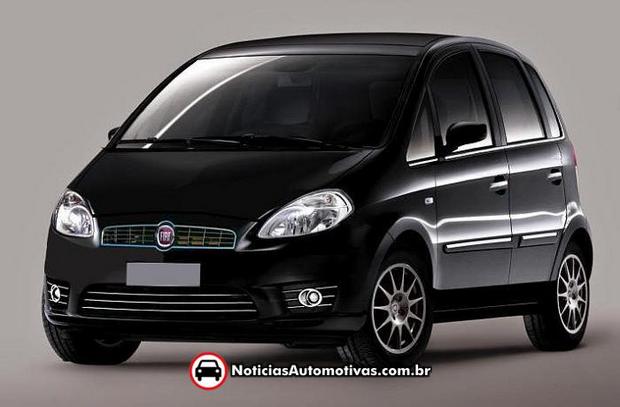
Fiat Bravo (2011)
Fiat Bravo (2011)
Fiat Bravo (2011)

Fiat Bravo

A modern automobile, packed with technology, with excellent level of comfort, safety and performance. Manufactured in Brazil, the new Fiat Bravo has exceeding attributed to be a strong rival in the prestigious segment of medium hatchbacks. And it arrives to consolidate Fiat's innovative reputation, proving that evolution does not know limits.

And evolution is really its brand. Fiat Bravo arrives to please the most demanding consumer: differentiated design, cutting-edge technology, with equipment that makes it truly complete; generous internal space with a lot of sophistication; besides sportiveness, with its refined and high efficiency mechanics.

An exactly beautiful automobile. Without doubt, the design is one of Fiat Bravo's strengths. Its aggressive and dynamic lines - inspired partly in the design of the Large Family automobiles - bear sportiveness together with the celebrated Italian design, but maintaining the new family feeling of the Fiat models.

Fiat Bravo arrives with two potent motorizations - the national 1.8 16V E.torQ with mechanical transmission or Dualogic, and the imported 1.4 T-Jet with 6-gear transmission - and three finishing versions - Essence, Absolute and T-Jet - very well equipped.

Fiat Idea (2011)

Fiat Idea (2011)
Fiat Idea (2011)
Fiat Idea (2011)
Fiat Idea (2011)
Fiat Idea (2011)

Fiat Idea

The successful Fiat Idea gains novelties of importance to become even more competitive. Among them, new exterior design, new E.torQ engines, an updated range of versions and more technology.

Fiat Idea's new design, developed in Brazil by the Centro Estilo Fiat [Fiat Style Center] for Latin America, gives the model a more sophisticated tone, with matching lines and with well defined planes limited by grooves. At the rear, new LED tail lights - Fiat Idea is the first national automobile to offer this technology. They accentuate the model's strong identity, endowing it a unique look.

The new Idea's interior offers even more driving comfort, first class finish and generous and very well-used space. With flat back floor and three seats defined with headrests, it transports five people comfortably.

The new Fiat Idea now offers the new family of E.torQ engines, 1.6 16V and 1.8 16V, developed by the engineering department of FPT - Powertrain Technologies. Flex-fuel (runs at any mix of ethanol and gasoline) and with 16 valves, these cutting-edge engines bring together performance, economy and low emission and noise level, besides reliability and durability. They are manufactured at the recently inaugurated engine plant in Campo Largo, Paraná.

Fiat Punto Evo Abarth (2011)

Fiat Punto Evo Abarth (2011)

Fiat Punto Evo Abarth

The sporty new Fiat Punto Evo Abarth also features a new performance mode selection system that modulates engine, braking and steering action to offer a choice of two different driving styles - Sport and Normal - to suit road conditions and driver preference.

The mode selector is conveniently located on the central tunnel in front of the gear lever and lets you switch between the two modes quickly and easily, simply by moving a lever. The currently selected mode is displayed on the dashboard. If you are looking for a safe, relaxing drive, all you have to do is select Normal mode, while if you feel the need to enjoy the full performance of your Fiat Punto Evo Abarth, flip the switch to Sport position and thrill to the power! Sport mode makes the car more responsive, using electrical servo systems to modify handling and deliver the ultimate sporting feel. Due attention has also been paid to safety of course, so Sport mode also engages the TTC system automatically.

As in rally cars, the driver is assisted by GSI (Gear Shift Indicator). On the Fiat Punto Evo Abarth, GSI acts like an intelligent "co-driver" and provides a signal on the instrument panel to tell you when the right moment has arrived to shift up reducing fuel consumption.

Fiat Punto Evo Abarth esseesse (2011)

Fiat Punto Evo Abarth esseesse (2011)

Fiat Punto Evo Abarth esseesse

Bolstered by the success of the recent conversion kits (one 500 Abarth in three is converted using the official kit), Abarth has expanded its range by launching the world premiere of the esseesse kits for the new Fiat 500C Abarth and Fiat Punto Evo Abarth models at the 2010 Paris International Motor Show. These are designed to improve performance, handling and safety without having to sacrifice the car's low emissions and fuel consumption.

The stand will host two esseesse cars that perfectly illustrate the spirit of Abarth tuning, encapsulating substance and unassuming good looks: in accordance with brand tradition and market requirements, Abarth cars are a mix of sporty yet elegant looks and safe driving experience, yet always with sporty performance levels. The Fiat Punto Evo Abarth esseesse is in fact capable of 180 HP with truly thrilling performance levels: maximum torque of 270 Nm at 3000 rpm, top speed of 216 km/h and acceleration from 0-100 km/h in just 7.5 seconds. The esseesse kit for the 500C turns the scorpion-branded convertible into a genuine open-topped sports car: 160 HP, maximum torque of 230 Nm, top speed of 209 km/h and acceleration from 0-100 km/h in just 7.6 seconds.

Fiat Uno (2011)

Fiat Uno (2011)
Fiat Uno (2011)
Fiat Uno (2011)
Rata TengahFiat Uno (2011)
Fiat Uno (2011)

Fiat Uno

The new Fiat Uno, a model bold on concepts and lines, comes to redefine the segment of compact cars. It is simply unique. One. Unique. Singular. Individual. This is how the dictionary defines the word "Uno". And this is how the new car from Fiat Automobile is.

The new Fiat Uno comes with all attributes that will make it a new success story. In addition to the new concept and bold lines, it enables an unprecedented level of customization in the Brazilian market. A new icon in the segment. With countless options from the factory and the dealer, the client can customize the car at his/her taste, with optional items and accessories, turning the new Uno into an extension of his/her own individuality.

However, behind the innovative look there is also a well-defined machine. It marks the premiere of two new engines - Fire 1.0 Evo and Fire 1.4 Evo, both Flex fuel - that incorporate modern technologies to ensure great performance with fuel saving and low level of emissions.

2011 Fiat Bravo Hatch Receives Minor Updates

2011 Fiat Bravo Hatch Receives Photography 1Fiat Bravo arrives with two potent motorizations – the national 1.8 16V E.torQ with mechanical transmission or Dualogic, and the imported 1.4 T-Jet with 6-gear transmission – and three finishing versions – Essence, Absolute and T-Jet – very well equipped.

2011 Fiat Bravo Hatch Receives Photography 2Fiat Bravo, for example, can be equipped with up to seven airbags – two frontal, two front sides, two for the protection of occupants’ heads, besides one for protection of the driver’s knees. With Dual Drive® electric steering, it arrives with avant-garde technology like fog lights with cornering system, NAV™ Radio, Xenon headlights, front parking sensor, folding external rearview mirrors and a new Skydome sunroof.

The two available motorizations for the new Fiat Bravo offer excellent performance, fuel economy and low emission levels. Both are compact and modern.

The E.torQ 1.8 16V engine puts together high performance and economy, with excellent torque at low rotations. Driving only with gasoline, its power is 130 hp at 5,250 rpm; with ethanol, 132 hp at the same rotation. And the maximum torque of 18.4 kgfm with gasoline and 18.9 kgfm with ethanol, is reached at 4,500 rotations. But at 2,500 rpm, the engine already produces 93% of its torque.

It equips the Essence and Absolute versions of the new Fiat Bravo.

Now the 1.4 16V T-Jet engine equips the sportive version of the hatchback. This compact gasoline turbo engine produces no less than 152 hp of power and 21.1 kgfm of torque at 2,250 rpm.

Small engines with performance of large engine are a strong trend in Europe. Their advantage is that, when not required, they are so economical as any other motor of the same capacity. To obtain this formula, an especially developed turbo compressor is employed to overfeed the engine with lesser capacity.

2011 Fiat Bravo Hatch Receives Photography 3The T-Jet engine comes coupled to a 6-gear mechanical Italian transmission.

Get to know below the hatchback versions:

* Essence 1.8 16V Flex with transmission mechanical
* Essence 1.8 16V Flex with transmission Dualogic
* Absolute 1.8 16V Flex with transmission mechanical
* Absolute 1.8 16V Flex with transmission Dualogic
* T-Jet 1.4 16V Turbo with transmission 6-gear mechanical

2011 Fiat Bravo Hatch Receives Photography 4
2011 Fiat Bravo Hatch Receives Photography 5Fiat Bravo Essence. Very well equipped, all Bravo versions bring ISOFIX, universal hook for setting of child seat. The Essence version also includes standard items like double airbag, manual air conditioning, electric steering with “City” function, 16″ light alloy wheel, fog lights with cornering system, disc brakes in the four wheels, automatic pilot, CD radio with MP3, electric external rearview mirrors, Safe Lock, front and rear electric windows with one touch system and anti-crash, steering wheel with height and depth regulation, fuel tank cap with electric opening, driver’s seat with height regulation, visors with mirror and lighting, illuminated glove compartment and trunk, 1/3 and 2/3 bipartite rear seat, five headrests with height regulation, hood for engine and transmission, hooks for fixing of load in the trunk, key with remote control for windows, locks and trunk, among several others.

For both Essence versions, the list of optional equipment includes brakes with ABS, Dual Temp® automatic air conditioning, Hi-Fi sound with subwoofer, Blue&Me™ or Blue&Me™ NAV + leather upholstered steering wheel with radio controls, Skydome electric sunroof, electrochromic internal rearview mirror, twilight sensor, rain sensor, rear and front parking sensor, electric folding of external rearview mirrors, front armrest with refrigerated span, rear armrest, besides partially leather upholstered seats in black or brown. The Dualogic version offers, even, the transmission control on the steering wheel, or butterflies.

Fiat Bravo Absolute. The version has the same standard items of the Essence version plus: Dual Temp® automatic air conditioning, Blue&Me, ABS in the brakes, Night Design, rear parking sensor, leather upholstered steering wheel with radio controls, front armrest with refrigerated span, besides the passenger seat central armrest , 17″ light alloy wheels, knobs and linings under the chromate windows, rags on carpet with Absolute embroidered, more exclusive fabrics and finish details.

Fiat Bravo Absolute Dualogic. Besides all standard equipment of the Absolute version, this also has Dualogic® Automatic transmission and transmission control on the steering wheel.

The two Absolute versions offer, as optional equipment, Skydome electric sunroof, tire pressure sensor, Hi-Fi sound with subwoofer, Blue&Me™ NAV, NAV™ Radio, front parking sensors, external rearview mirrors with electric folding, electrochromic internal mirror, twilight and rain sensors and partially leather upholstered seats, plus the airbags: kneebag, sidebags and windowbags.

Fiat Bravo T-Jet. The list of standard items includes all equipment present in the Absolute version, and even 6-gear transmission, ESP (stability control system) + Hill Holder, 17″ exclusive light alloy wheels, Overbooster button on the panel, darkened front headlights, double chromate exhaust, steering wheel, red painted brake calipers – for the first time in the Fiat series -, hand brake and leather upholstered level knob with red seams, pedal system and sportive footrest, spoiler, mini-skirts, besides diverse finish details that differentiate the sportive version from the new hatchback.

The customer can equip even his Fiat Bravo T-Jet with xenon headlights, tire pressure sensor, Skydome electric sunroof, NAV™ Radio, Blue&Me™ NAV, electrochromic internal mirror, twilight and rain sensors, Hi-Fi sound with subwoofer, 18″ light alloy wheels + tire 225/40, partially leather upholstered seats, plus the airbags: kneebag, sidebags and windowbags.

2011 Fiat Idea

2011 Fiat Idea Sporting Front Angle View 2011 Fiat Idea

Fiat Idea initially attend for Brazil and then throughout South America. This car will be offered in four different guises – Attractive , Essence, Sporting and Adventure. The latter is blessed with extra ground clearance and some rugged styling elements such as the heavy body cladding to the car’s lower portions, chunkier front and rear bumpers, more prominent roof rails, off-road tires, skid plates, and externally mounted spare wheel and tire.

2011 Fiat Idea Sporting

2011 Fiat Idea Sporting Front Side View 2011 Fiat Idea

2011 Fiat Idea Sporting Rear Side View 2011 Fiat Idea

In general, the design upgrades are mainly to the front with larger headlamps, Fiat’s new company grille and a redesigned bumper. The rear lights are new while the tailgate is more sculptured and bumper has been reprofiled. Inside, the Brazilian Idea drops the European market model’s center-mounted instrument cluster in favor of a more conventional layout.

In Brazil, buyers will have a choice of three engines, a 1.4-liter petrol and the Flex-Fuel 1.6-liter and 1.8-liter units. It remains to be seen if Fiat will also update the Idea in Europe. The South American model gets a new appearance that brings it line with Fiat’s more recent models such as the Linea and Bravo, as well as a revised engine lineup.

2011 Fiat Idea Adventure

2011 Fiat Idea Adventure Front Angle View 2011 Fiat Idea

2011 Fiat Idea Adventure Rear Angle View 2011 Fiat Idea

2011 Fiat Idea Essence

2011 Fiat Idea Essence Front Side View 2011 Fiat Idea

2011 Fiat Idea Essence Rear Side View 2011 Fiat Idea

2011 Fiat Idea Atractive

2011 Fiat Idea Atractive Front Side Top View 2011 Fiat Idea

2011 Fiat Idea Atractive Rear Side Top View 2011 Fiat Idea

Blog Archive